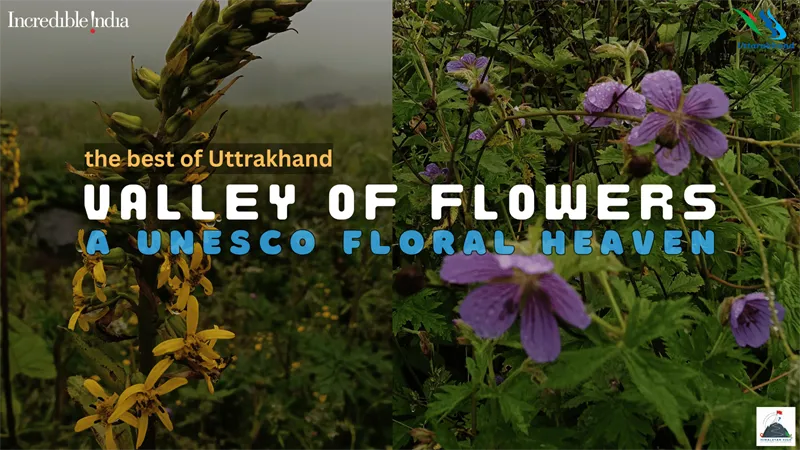
Ligularia Fischeri & Wild Geranium
fischer's leopard plant
Roaring Falls Along The Trail
Welcome to Valley of Flowers
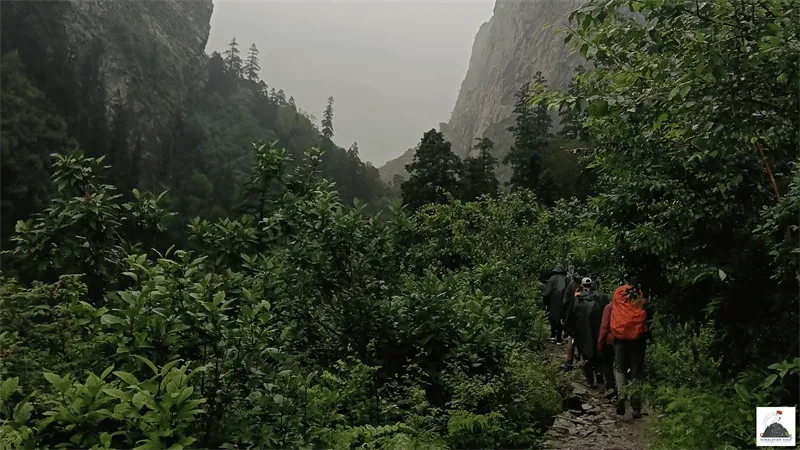
Trekking Though The Mist
be prepared, its common here
Serene Ambience On A Rainy Day
Peaceful Pushpawati River valley views.
Trekking In Solitude
befriend yourself
Ghangaria Ready To Host Us
little away from the noise
The Bridge to Wilderness
Crossing into the floral sanctuary.
Creeping Bellflower
campanula rapuncoloides
Swiss Tent Accommodation In Ghangaria
our home for 3 nights
White Himalayan Hogweed
a common medicine
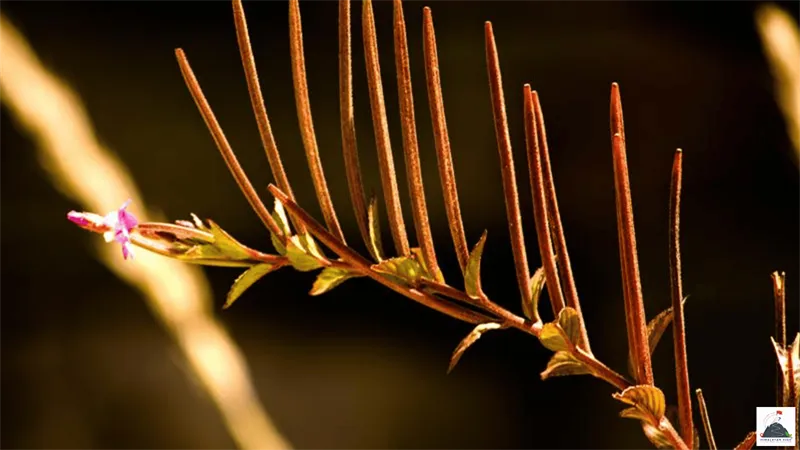
Epilobium Latifolium
An Usual View Here
The Gateway To Valley Of Flowers
Entering the UNESCO World Heritage.
Wild Daisy Bush
Vibrant blooms of Himalayan Daisies.
Himalayan Balsam
Impatiens Glandulifera
Explore This Trek In Details
Version: Standard 6D/5N
6 Days / 5 Nights Easy Minimum Altitude: 2600m Maximum Altitude: 4161m Starts At: Auli Ends At: Auli
Route
Auli → Govind Ghat → Bhyundar → Ghangaria → Ghangria → Valley of flowers (excursion) → Ghangria → Hemkund Sahib (excursion) → Bhyunder → Govindghat → Auli → Chamoli → Karn Prayag
Terrain
Alpine MeadowLake Side
4 Trekking Days
3 Camping | 2 Hotel | 0 Homestay Nights
4 Driving Days
40 Km Trekking Distance | 540 Km Driving Distance
Suitable For
Everyone,Above 10 only
▲ Day 1 Arrive in AuliArrival Day
Arrive In Auli
Overnight In: Auli (2600m / 8530 ft )
Accommodation: Hotel
Meals Included: Dessert, Dinner, Evening Tea Snacks, Hot Drinks, Soup
Quick Tips For The Day:
- Journey from Haridwar to Joshimath is a long one, but definitely not a boring one. As you swirl up, yopu come accross the Prayags ( confluence of rivers) of Uttrakhand, coming down from the Himalayan Glaciers on the higher reaches of the Himalayan state.
- These rivers unite to form the mighty Ganga which flows down Haridwar to rest for India.
- Ganga is known as the lifeline of India, and Uttrakhand - The Dev Bhoomi ( God's Land)
The streets are colorful too !!
- Travelling in mountain roads for 280 KMS can be really tiring. So take a good sleep in your hotel tonight.
- We stay in Auli for the night owing to its calmness, great views and exotic ambienbce
- Day 1
- 375 - Rishikesh
- Day 1
- 1450 - Karn Prayag
- Day 1
- 1850 - Joshimath
- Day 1
- 2600 - Auli
270Km, 8 -10hrs.▲ Day 2 From Auli to GhangariaDrive & Trek Day
From Auli (2600m / 8530 ft ) To Ghangaria (3094m / 10151 ft ) Via Govind Ghat (1815m / 5955 ft ), Bhyundar (2458m / 8064 ft ) - 5-6 Hrs. 10 Kms
08:00 Hrs. - 14:00 Hrs.
Overnight In: Ghangaria (3094m / 10151 ft )
Accommodation: Camping
Meals Included: Breakfast, Dessert, Dinner, Evening Tea Snacks, Hot Drinks, Lunch, Morning Tea, Soup
Quick Tips For The Day:
- Early morning post breakfast, we board our vehicles to drive to Ghangaria from where our trek starts.
- Its a pprox 40km drive from Auli to Pulna, from where its approx 9km walk to Ghagharia
- The trek is beautiful through the greens passing by the villages of Pulna and Bhyundar.
- Being a pilgrimage route, the trail is well maintained and it takes about 4 - 5 hours to reach Ghangaria.
- Soon after crossing the village of Bhyunder, as we approach Ghangaria, we come to the meeting point of the Bhyunder Ganga which originates from Hathi Taal at the base of Kankul Pass and Hathi Parvat, and Pushpawati river. Both of them are tributaries of the Laxman Ganga which further is the tributary of Alakananda.
- We follow the Pushpavati river which flows through the Valley Of Flowers and soon arrives at a level ground marked by few commercial settlements. This is Ghangaria and we rest for the day here, either in a hotel or in a tent.
- Day 2
- 2600 - Auli
- Day 2
- 1815 - Govind Ghat
- Day 2
- 2460 - Bhyundar
- Day 2
- 3095 - Ghangaria
10Km, 5 - 6hrs.▲ Day 3 Explore Valley of flowersExploration Day
From Ghangria (3094m / 10151 ft ) To Ghangria (3094m / 10151 ft ). Excursion To Valley of flowers (3531m / 11585 ft ) And Return To Ghangria (3094m / 10151 ft ) - 5-7 Hrs. 8 Kms
08:00 Hrs. - 14:00 Hrs.
Overnight In: Ghangria (3094m / 10151 ft )
Accommodation: Camping
Meals Included: Breakfast, Dessert, Dinner, Evening Tea Snacks, Hot Drinks, Lunch, Morning Tea, Soup
Quick Tips For The Day:
- We start the day early after breakfast to have some good time on hand for the Valley of Flowers - A Unesco World Heritage Site.
- Remember to carry pack lunch as the day will be long and with no food to buy on the way.
- Soon after we start, within some 30 minutes we reach the entry gate to buy tickets to the National Park.
- The trek is an easy one with a well laiden trek path. Once you enter the valley, have your own time in it.
- Here it's all of the vivid colours of varied species of flowers, river Puspawati flowing through it and green walls of a mountain rising on both side. It's better we head back by 2 - 3 PM for Ghangaria.
- Day 3
- 3095 - Ghangria
- Day 3
- 3095 - Ghangria
- Day 3
- 3535 - Valley of flowers
- Day 3
- 3095 - Ghangria
8Km, 5 - 7hrs.▲ Day 4 Explore Hemkund SahibExploration Day
From Ghangria (3094m / 10151 ft ) To Ghangria (3094m / 10151 ft ). Excursion To Hemkund Sahib (4161m / 13652 ft ) And Return To Ghangria (3094m / 10151 ft ) - 5-7 Hrs. 12 Kms
08:00 Hrs. - 14:00 Hrs.
Overnight In: Ghangria (3094m / 10151 ft )
Accommodation: Camping
Meals Included: Breakfast, Dessert, Dinner, Evening Tea Snacks, Hot Drinks, Lunch, Morning Tea, Soup
Quick Tips For The Day:
- Today we are destined for Sri Hemkund Sahib and the pious lake of Hemkund.
- It's a pilgrim route but a tough one as compared to the previous day.
- It's steep and climbs up higher above 4000 meters to take us to one of the most pious places for the Hindus and especially the Sikhs
- The trail climbs up steep once you leave Ghangaria but the views around keep you motivated.
- The positive environment of the Gurudwara makes you feel good
- Have lunch at the Gurudwara. Remember to leave back for Ghangaria soon post 2 PM.
- Day 4
- 3095 - Ghangria
- Day 4
- 3095 - Ghangria
- Day 4
- 4165 - Hemkund Sahib
- Day 4
- 3095 - Ghangria
12Km, 5 - 7hrs.▲ Day 5 From Ghangria to AuliDrive & Trek Day
From Ghangria (3094m / 10151 ft ) To Auli (2600m / 8530 ft ) Via Bhyunder (2458m / 8064 ft ), Govindghat (1815m / 5955 ft ) - 5-7 Hrs. 10 Kms
08:00 Hrs. - 14:00 Hrs.
Overnight In: Auli (2600m / 8530 ft )
Accommodation: Hotel
Meals Included: Breakfast, Dessert, Dinner, Evening Tea Snacks, Hot Drinks, Lunch, Morning Tea, Soup
Quick Tips For The Day:
- we return via the same route as we had come.
- We typically rest in Auli for its calmness, but if you prefer quick transfer the next day, you may choose to stay in Joshimath as well
- Day 5
- 3095 - Ghangria
- Day 5
- 2460 - Bhyunder
- Day 5
- 1815 - Govindghat
- Day 5
- 2600 - Auli
10Km, 5 - 7hrs.▲ Day 6 Departure and onward journeyDeparture Day
Departure and onward journey
Cost Of Transport Included: YES
Quick Tips For The Day:
- We return to Rishikesh to day. We have to leave early morning today in order to reach Rishikesh or Dehradoon on time to make our journet to onward destination or back home
- A beautiful trek comes to an end, until next time
- Day 6
- 2600 - Auli
- Day 6
- 1400 - Chamoli
- Day 6
- 1450 - Karn Prayag
- Day 6
- 375 - Rishikesh
270Km, 8 - 9hrs.
Other Customizable Variations of the Valley of Flowers Hemkund Trek
Version: With Gorsons, Badrinath, Mana
9 Days / 8 Nights Easy Minimum Altitude: 2600m Maximum Altitude: 4161m
7 Trekking Days
1 Camping | 7 Hotel | 0 Homestay Nights
4 Driving Days
60 Km Trekking Distance | 570 Km Driving Distance
Trekking avg 5.86 hrs
We are not limited to just these options. These are simply some of the most commonly requested and well planned customizations.
If you have a different requirement, talk to us.
We only organize lesser done, uncrowded, customizable and personalized, small-group private trekking tours in the Himalayas with full safety protocol in place. All customizations will be guided by this principle only.
Swipe →
Valley of Flowers Hemkund Trek - A Detailed Overview
“In all my mountain wanderings I had not seen a more beautiful flower... the fine rain-drops clung to its soft petals like galaxies of seed-pearls.”
These words, penned by mountaineer Frank S. Smythe in 1931, introduced the world to the Bhyundar Valley. Smythe stumbled upon this floral paradise accidentally while descending from the Mt. Kamet expedition via the high-altitude Bhyunder Khal. What he discovered was a vibrant ecosystem so unique it was later enshrined as a UNESCO World Heritage Site.
Today, this "Valley of Flowers" remains a sanctuary of biodiversity, home to the elusive blue primula, Brahma Kamal, and over 500 species of high-altitude wildflowers. Accessible via a scenic trek from the road head at Govindghat, it offers a rare transition from rugged Himalayan terrain to lush, sub-alpine meadows.
Top Reasons to Choose the Valley of Flowers Hemkund Trek
- Scenic Trekking Routes: Discover the picturesque trails leading to the Valley of Flowers, an accessible trekking paradise nestled in the Uttarakhand Himalayas.
- Alpine Flora Diversity: Immerse yourself in the vibrant landscape of the Valley of Flowers, a UNESCO World Heritage Site teeming with over 500 species of wildflowers, including the iconic Brahma Kamal.
- High-Altitude Lake Experience: Reach the tranquil shores of Hemkund Sahib (4,633m), where spiritual serenity meets breathtaking mountain vistas.
- Renowned Peaks: Marvel at towering giants such as Gauri Parbat (6,708m) and Hathi Parbat (6,727m), providing a majestic backdrop to your trekking experience.
- Family-Friendly Adventure: Suitable for novice trekkers and families, this trek offers a moderate challenge while ensuring comfort with amenities like homestays and private rooms.
- Seasonal Splendor: Best enjoyed from April to June, or during the monsoon months from July to September, when the flowers bloom in vibrant colors.
- Breathtaking Valley Views: Experience the stunning contrasts of rugged Himalayan landscapes and lush sub-alpine meadows as you traverse along the Alakananda and Bhyunder Ganga rivers.
- Historical Significance: Follow in the footsteps of Frank S. Smythe, who introduced the world to this floral haven after his discovery in 1931 during his descent from Mt. Kamet.
How to Photograph the Valley of Flowers: Pro Tips for Rainy Season & Macro Shots
Factual Pointers for 2026 Photography in VoF
- The "Mist" Factor: The Valley is often shrouded in fog during July and August. Use this "natural softbox" to capture moody, atmospheric shots without the harsh shadows of the midday sun.
- Macro Focus: Most flowers here, like the Blue Primula or Androsace, are tiny (under 6 inches). A dedicated macro lens or a phone with a strong "Macro Mode" is essential to capture the "seed-pearl" dew drops Smythe described.
- Color Contrasts: Look for the Himalayan Blue Poppy against grey schist rocks or Pink River Stonecrop against the dark, wet boulders of the Pushpawati River for high-impact color isolation.
- The Scale Problem: The valley is huge, but the flowers are small. To show scale, include a trekker in the mid-ground or use a wide-angle lens (16mm-24mm) placed very low to the ground to make the foreground flowers look dominant against the peaks.
Pro Tips for the Monsoon & Rainy Season
- Mastering the "Wet" Look: Rain enhances saturation. Use a Circular Polarizer (CPL) filter to remove the "shine" and glare from wet leaves and petals; this reveals the deep, true greens and floral pigments that otherwise look washed out.
- Protection is Priority: In 2026, the monsoon can be unpredictable. Use Silica Gel packets in your camera bag to absorb the 90% humidity. Always carry a "dry bag" for quick storage during sudden heavy downpours.
- Background Management: Because the hillsides are lush green, look for "separation." Shoot from a low angle to get the flowers against the white/grey misty sky or the dark shadows of the gorge to make the colors "pop."
- Stabilization: Due to the persistent cloud cover, light levels are often low. Even with modern IBIS (In-Body Image Stabilization), a lightweight carbon-fiber travel tripod is a "pro-move" for sharp macro shots when the wind dies down.
- The "Golden Hour" Shift: Forget the standard sunrise/sunset rules. In the monsoon, the best light often occurs immediately after a rain shower when the clouds break and "God rays" illuminate the valley floor. Be ready to shoot the moment the rain stops.
Detailed photography expeditions and customized 2026 private treks are available now with Himalayan High.
Valley Of Flowers Permits
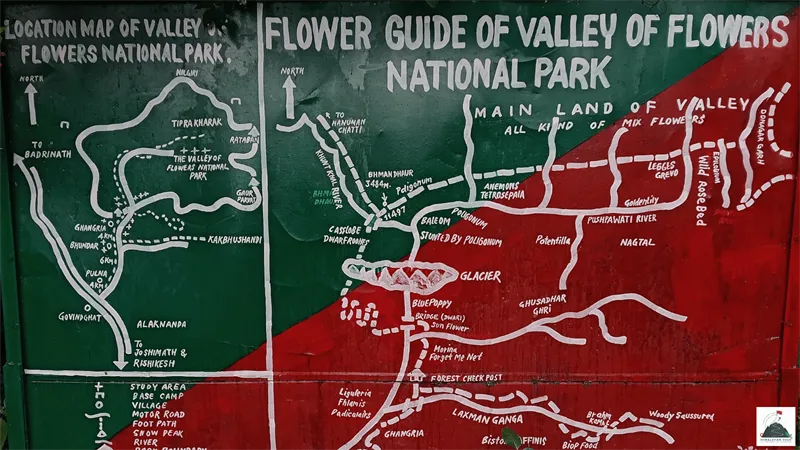
Embarking on the enchanting Valley of Flowers Hemkund Trek requires obtaining the necessary permits to ensure your adventure unfolds smoothly. These permits are essential for preserving the breathtaking biodiversity of the area.
For Indian trekkers, the fee is a modest Rs. 150/- for a three-day duration, with an additional Rs. 50/- for each extra day. Foreign tourists will find that the cost is slightly higher, at Rs. 600/- for the first three days and Rs. 250/- thereafter.
Nature lovers, rejoice! Capturing the mesmerizing landscapes with a still camera comes free of charge, whether you're a professional or an amateur. However, if you plan to bring along a video camera, be aware of the fees:
- Non-professional video camera: Free
- Professional video camera: Indians - Rs. 500/-; Foreigners - Rs. 1500/-
These permits not only grant you access to a UNESCO World Heritage Site but also contribute to maintaining its pristine environment. Don’t miss this unique opportunity to explore one of India’s most floral treasures!
Altitude and Acclimatization Profile For The Valley of Flowers Hemkund Trek
- Day 1
- D1Rishikesh
- Day 1
- Karn Prayag
- Day 1
- Joshimath
- Day 2
- D2Auli
- Day 2
- Govind Ghat
- Day 2
- Bhyundar
- Day 3
- D3Ghangaria
- Day 3
- Ghangria
- Day 3
- Valley of flowers
- Day 4
- D4Ghangria
- Day 4
- Ghangria
- Day 4
- Hemkund Sahib
- Day 5
- D5Ghangria
- Day 5
- Bhyunder
- Day 5
- Govindghat
- Day 6
- D6Auli
- Day 6
- Chamoli
- Day 6
- Karn Prayag
- Day 7
- Rishikesh
Frequently Asked Questions
What is the best time to do the Valley of Flowers Hemkund Trek?
Is mobile network available on the Valley of Flowers Hemkund Trek?
Quick answer: No - Only In Base Villages
Is internet available on the Valley of Flowers Hemkund Trek?
Quick answer: No - Only In Base Villages
What type of trek is this?
Return Type Trek
In this type of trek, the entry point and exit point is same. You trek to a particular destination and return back to the same point
What is the accommodation type on this trek?
Camping / Homestay
Camping/Homestay treks are a mixed style where some nights are spent in tents and some in village homestays or basic guesthouses. This balance offers both wilderness camping experience and cultural immersion with local hospitality. Comfort and facilities vary by village and season.
What kind of toilet facilities can I expect on this trek?
A mix of homestay toilets (where available) and toilet tents at campsites. Facilities vary by village; camping nights usually rely on toilet tents or designated pits.
How is food served during the trek?
Food is served based on the night’s arrangement: fresh cooked meals by trek staff during camping nights and home-style local meals during homestay nights. Meal style and variety depend on package and village logistics.
How is human waste managed on this trek?
Handled via village toilet systems during homestays and toilet tents/pits during camping nights. Strict separation from water sources is maintained during camping.
How is food waste managed on this trek?
Food waste is minimized and handled responsibly. In villages, it follows local disposal norms; during camping, biodegradable waste is managed away from water sources or carried out as required.
How is plastic waste handled on this trek?
Plastic is segregated and carried back to the roadhead for disposal. Trekkers should avoid single-use plastics and carry personal waste.
How do you follow Leave No Trace principles on this trek?
Combination of campsite discipline and village-respect practices: no littering, low noise, water source protection, and respect for local customs and private property. Waste is segregated and carried out wherever local disposal is unreliable.
Is personal porterage / offloading available?
Yes, on horses.
Important notes:
- No duffel bags or suitcases are allowed for offloading.
- Only a trekking rucksack that is easier to carry by porters or on horses.
- Your bag will move from camp to camp and will not stay with you during the day’s trek.
- If you offload your rucksack, you must carry a day pack with essentials (rainwear, warm layer, medicines, food, and water).
- It must be booked at least 10 days before the trek start date so we can arrange porters/horses.
- It is either full offload or none. It cannot be arranged ad-hoc mid-trek or on a per-day basis.
What type of terrain can I expect on the Valley of Flowers Hemkund Trek?
Is cloakroom / luggage storage available for the Valley of Flowers Hemkund Trek?
Yes. Basic luggage storage is available.
Please note that this is not a secured locker facility.
Do not leave valuables, cash, jewelry, fragile items, or important documents.
Luggage is usually kept on a trust basis at the same hotel, homestay, or with known local contacts where we stay before and after the trek.
What kind of food is served on the Valley of Flowers Hemkund Trek?
Indian, Garhwali
We serve a mix of continental-style trek meals as well as simple, freshly cooked home-style food.
The exact menu and style of meals may vary depending on the trek itinerary, region, and the package you are booked on.
Meal inclusions typically cover:
- Breakfast, Lunch, and Dinner (BLD)
- Two tea breaks daily (morning and evening)
- Soup in the evening
- Fresh salads where feasible
- Dessert on select days
- Hot night beverage / tonic before sleeping
Please note that detailed, day-wise meal information is mentioned in the respective day’s itinerary wherever applicable.
Where does the Valley of Flowers Hemkund Trek start?
Where does the Valley of Flowers Hemkund Trek end?
What is the grade / difficulty of the Valley of Flowers Hemkund Trek?
Easy
Usual daily walks of 4 - 5 hours in altitude below 4000 meters. The sleeping altitude on these treks are below 4000 meter and the trails are gradual involving no steep ascent or descent. Sometimes, the trail may be longer, but on level trails. The duration of trek may be a week or lesser than it. The trek is not too remote and evacuation might be possible from almost any point of the trek
What is the duration of the Valley of Flowers Hemkund Trek?
06 Days, 05 Nights, Rishikesh to Rishikesh
Is the Valley of Flowers Hemkund Trek inside or near a national park?
Valley of Flowers National Park
Thursday, June 11, 2026 2:43:59 PM