You work hard for three days to reach Har Ki Dun, and then you turn around. Two more days change that. They take you over to Ruinsara Tal, one of the most peaceful lakes in the Himalayas.
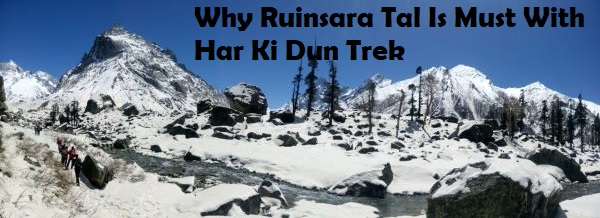
We at Himalayan High believe the Har Ki Dun - Ruinsara Tal Trek gives you more value for your time and money than the usual Har Ki Dun Trek. Here is why we feel so strongly about it.
Har Ki Dun needs no introduction
Anyone who has done even one or two treks in the Indian Himalayas has likely heard of the Har Ki Dun valley, and of the beautiful trek that offers so much of the Himalayan experience. It is a complete package. Some treks you can never write enough about, and Har Ki Dun is one of them. It is one of the best-known and most loved treks in India, and trekkers have been walking it for many decades. That alone says a lot about how much people have loved it.
Can Har Ki Dun be even better?
Yes, it can. Add two more days to your plan and explore the next valley, the one that runs towards the Bandarpunch and Kalanag glaciers.
- The walk: through high alpine forest and meadows, closer to the snow peaks of Bandarpunch, White Needle, Ruinsara and Kalanag.
- The giants beside you: you walk alongside the great massif of the Swargarohini group.
- The lake: you camp beside Ruinsara Tal, one of the most beautiful and peaceful lakes in the Himalayas.
The whole experience is top class. It adds a great deal to the Har Ki Dun trek, which, we feel, is too short to really enjoy the beauty and feel of this valley.
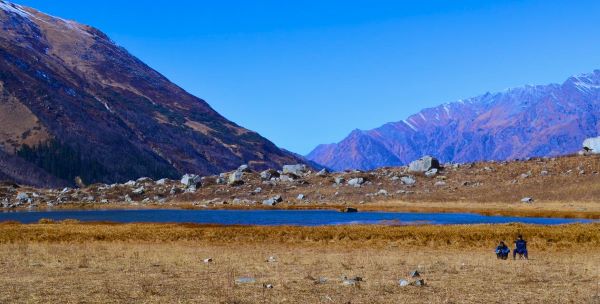
Photo: Aachal Thapa
5 reasons Ruinsara Tal is worth two extra days
1. The usual Har Ki Dun trek turns back too early
On the usual Har Ki Dun trek, you climb for three hard days to reach the best part of the valley, enjoy it for about a day, and then start back down by much the same way you came up. Har Ki Dun is a very beautiful place; our only concern is that the trek begins to descend so soon.
You climb from Sankri, at 1,920 metres, to Har Ki Dun, at 3,600 metres. Having worked so hard to get up there, it makes more sense, and is better value for your time and money, to stay at that height for a few days and explore the other beautiful corners of the region. So unless you are really short of time, consider the Har Ki Dun - Ruinsara Tal Trek.
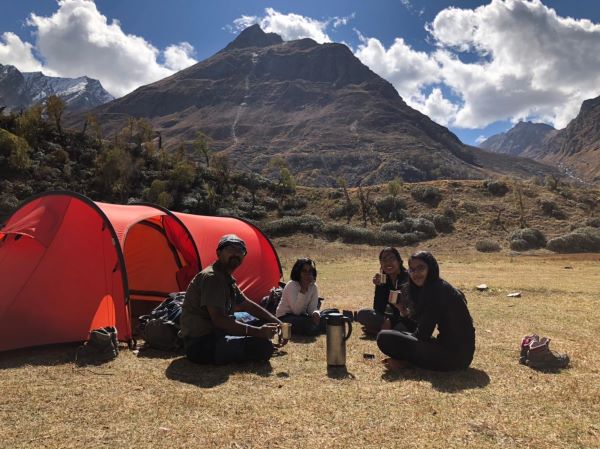
Photo: Sanjay Joshi
2. You explore the Bandarpunch and Kalanag valley
Two major streams run through this region and split it into two valleys, Har Ki Dun and Ruinsara.
- Har Ki Dun valley: dominated by Hata peak, the Swargarohini massif and Har Ki Dun peak.
- Ruinsara valley: dominated by the elegant peaks of Kalanag, the twin peaks of Bandarpunch, White Needle and Ruinsara peak.
You could say the Swargarohini massif divides the two valleys. Reaching the Ruinsara valley from Har Ki Dun is easy: in a single day's trek you are on the other side, with new peaks and meadows opening up. Two extra days spent exploring it make the whole trek more rewarding.
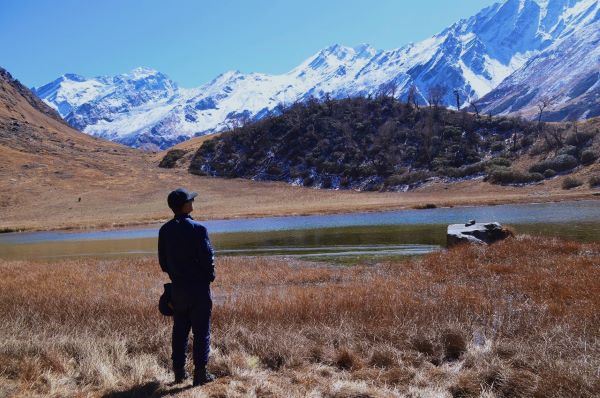
Photo: Aachal Thapa
3. You camp beside Ruinsara Tal
Ruinsara Tal is a big, beautiful lake surrounded by tall mountains, green meadows and many kinds of colourful wild flowers. The slow ripples of the lake will calm you, and may even help you think through a few of life's problems. Ringed by high peaks, it is very picturesque and a joy to photograph. After working so hard to get here, the lake gives you the peace and calm that make a trek memorable, even life-changing.
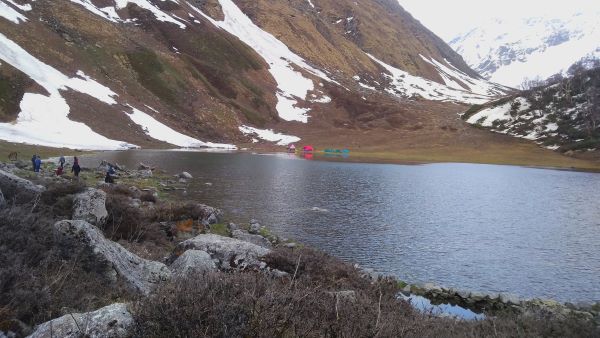
Photo: Himanshu Gupta
4. Devsu Bugyal is beyond words
On the usual Har Ki Dun trek, you come down much the way you went up. The Har Ki Dun - Ruinsara Tal trek comes down through Devsu Bugyal instead, a vast meadow that is very scenic, its lush green bright against the blue sky, with conifers scattered across it.
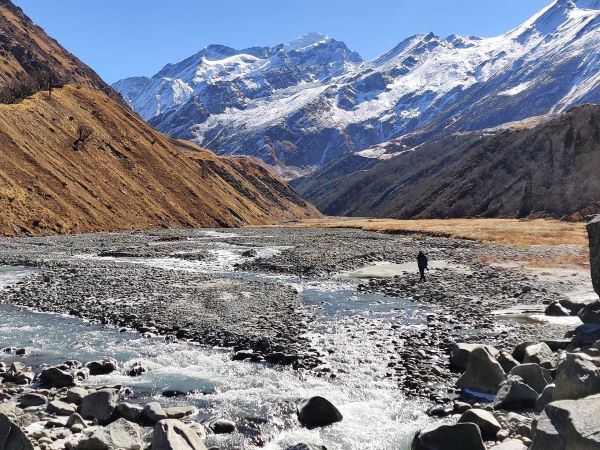
The Ruinsara Gad flowing down the valley. Photo: Aachal Thapa
5. Fewer people, and real solitude
The Har Ki Dun trek is more popular because it is shorter and easier, so it is busier too. The Ruinsara valley is much quieter. On this route you meet only a few shepherds grazing their sheep, and perhaps a few trekkers heading for the Bali Pass. Apart from them, not even the local villagers come up here. By adding Ruinsara Tal to your Har Ki Dun plan, you give yourself the true feel of the Himalayas: solitude and peace. Every trek we run is private, too: only your own people, at your pace.
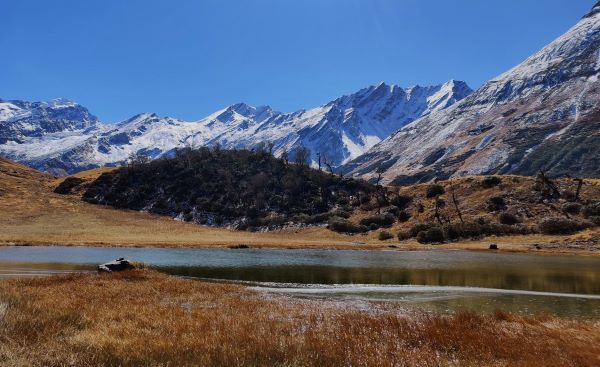
Photo: Aachal Thapa
Do it in one go
I hope you now see why it is worth adding a couple of days to your Har Ki Dun plan and completing it with Ruinsara Tal. Most of us rarely go back to the same valley; there is always a new place calling. And if you do come back, you have to climb all the way up again before you can reach Ruinsara. That is why doing both together, as the Har Ki Dun - Ruinsara Tal Trek, gives you more value for your time and money.
Plan your Har Ki Dun trek
The Har Ki Dun - Ruinsara Tal Trek is the one we recommend. If time is short, there is the Har Ki Dun Trek, or the Har Ki Dun 3 Day Shortest Trek for fit trekkers with very few days. Before you go, read how to prepare for a high altitude trek and how to choose a campsite. For more of the state, see Uttarakhand's private treks.
Questions trekkers ask
How many extra days does Ruinsara Tal add to the Har Ki Dun trek?
Two. The extra days take you into the next valley, to camp beside Ruinsara Tal, and bring you down through the Devsu Bugyal meadow.
Is Ruinsara Tal hard to reach from Har Ki Dun?
No. Ruinsara is the valley next to Har Ki Dun, and you reach it in a single day's trek.
Is Ruinsara Tal crowded?
No. You are likely to meet only a few shepherds and perhaps some trekkers bound for the Bali Pass. It is much quieter than the main Har Ki Dun trail.
Which peaks can you see from the Ruinsara valley?
Kalanag, the twin peaks of Bandarpunch, White Needle and Ruinsara peak, with the Swargarohini massif between the Ruinsara and Har Ki Dun valleys.