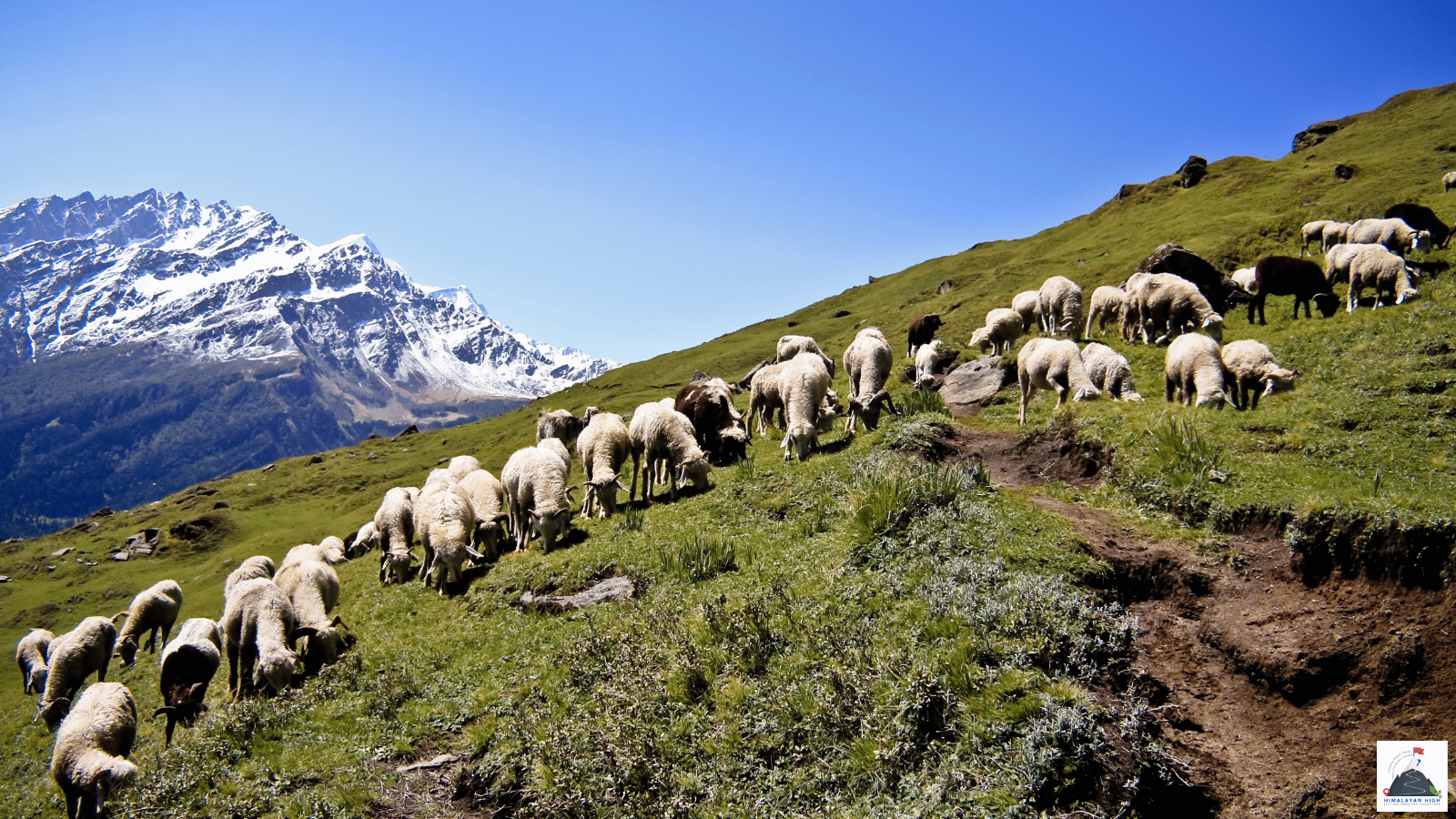
Barsu is a village at about 2,200 m above the Bhagirathi valley, 40 km past Uttarkashi. It is about 200 km from Rishikesh on the Gangotri highway; draw cash in Uttarkashi, which has the last dependable ATMs.
Region: Uttarakhand - Garhwal
Route hubs: Rishikesh - Narendra Nagar - Chamba - Chinyalisaur - Dharasu - Uttarkashi - Bhatwari - Barsu
Nearest airport
Jolly Grant Airport, Dehradun (DED)
210 km • About 8.5 hr
Nearest railhead
Yog Nagari Rishikesh railway station, Rishikesh (YNRK)
205 km • About 8.5 hr
Treks that start in Barsu
2 of our treks begin in Barsu. Each page has the full itinerary from day 1.
From the airport
The nearest airport is Jolly Grant Airport (DED), which serves Dehradun and lies about 20 km from Rishikesh, with several daily flights from Delhi and direct flights from other Indian cities. Barsu is about 200 to 220 km from the terminal, 8 to 9 hours by taxi, either via Dehradun and Mussoorie or via Rishikesh and Chamba. Taxis can be hired at the airport; buses and shared jeeps to Uttarkashi mostly start from Dehradun or Rishikesh, 30 to 45 minutes away. Unless you land early in the morning you will not reach Barsu before dark, so plan a night in Rishikesh, Dehradun or Uttarkashi first. If flights to Dehradun do not suit, fly to Delhi and continue by train or bus to Dehradun or Haridwar, about 5 to 7 hours.
From the railway station
Rishikesh's station for long-distance trains is Yog Nagari Rishikesh (YNRK), about 205 km from Barsu. Only a handful of long-distance trains run to it, so many travellers from Delhi take a train to Haridwar (HW), about 23 km from Rishikesh, or to Dehradun (DDN), which has the Shatabdi and the overnight Nanda Devi Express from Delhi and is slightly closer to Barsu, at about 185 km. From any of these stations a taxi can take you straight to Barsu in 8 to 9 hours. An overnight train that arrives by about 6 am still leaves time to reach Barsu the same day; a midday arrival does not, so plan a night in Rishikesh or Dehradun.
By road
Barsu is a village at about 2,200 m on the slopes above the Bhagirathi valley, some 40 km beyond Uttarkashi. The usual approach is the Gangotri highway (NH 34) from Rishikesh: about 200 km and a long day of 8 to 9 hours including meal stops.
- Rishikesh to Chamba via Narendra Nagar: about 60 km, around 2 hours, climbing out of the plains on the widened Char Dham highway.
- Chamba to Uttarkashi via Chinyalisaur and Dharasu: about 105 km, 3 to 4 hours, past the Tehri reservoir and then up the Bhagirathi.
- Uttarkashi to Bhatwari: about 30 km, roughly an hour, up the valley past Maneri.
- Bhatwari to Barsu: about 12 km, 30 to 45 minutes. About 2 km beyond Bhatwari a narrow, single-lane paved road leaves the highway and climbs nearly 600 m in hairpin bends to the village.
From Dehradun a shorter hill road runs via Mussoorie and Suwakholi and joins the highway near Chinyalisaur: about 185 km to Barsu, 7 to 9 hours. In the monsoon (late June to mid-September) landslides can hold up traffic on the highway for hours, and after winter snowfall (December to February) the last climb to Barsu can be slippery.
By bus
No direct bus runs from Dehradun or Rishikesh to Barsu. Uttarakhand Transport Corporation buses and private union buses run to Uttarkashi from both towns, and some continue up the Gangotri road past Bhatwari, though they do not take the side road up to the village. In Dehradun, buses for Uttarkashi leave from the Hill Bus Stand beside the railway station, mostly early in the morning (from about 5.30 am, with few departures after 8 am), and take about 6 to 7 hours. Shared taxis to Uttarkashi also leave Dehradun early. If you miss the morning departures, a private taxi is the only practical way to get up the same day.
Local transfers
Uttarkashi is the last sizeable town and the place to change. A few shared jeeps run from Uttarkashi up to Barsu and Raithal, mostly in the morning; later in the day, or for a group with luggage, hire a taxi in Uttarkashi for the last 40 km (1.5 to 2 hours). Aim to reach Barsu by mid-afternoon. Draw cash in Uttarkashi: it has the last dependable ATMs, and even those can run out. Phone signal usually works in Barsu, but expect little or none once you start walking.
Safety
Keep a spare day either side of the trek: the drive is long, and a single landslide can add hours, especially in the monsoon. Avoid driving after dark. Barsu is at about 2,200 m, but the trail gains some 1,300 m to Dayara Bugyal (about 3,550 m) within the first one or two trekking days, so arrive rested and drink plenty of water. The nearest medical help is the health centre at Bhatwari, and the district hospital is in Uttarkashi. Ask about the road ahead in Uttarkashi before driving on.
Travel tips
- Plan buffer time for road delays, especially in monsoon and winter.
- Start early for long drives to avoid night stretches on mountain roads.
- Keep offline maps and cash as backup in low-network zones.
- If you are continuing to high altitude areas, acclimatize and hydrate well.
Friday, September 25, 2020 9:36:28 AM
Every day I keep learning new things, but as of now, I think I can describe myself as a Loyal Himalayan Lover, Avid Trekker, Student Of Mountaineering, Amateur Photographer and an Enthusiastic Anthropologist. I am a Computer Science Engineer by education and previously worked as a Software Developer for premium IT companies. However, I quit the luxury of a high-earning corporate job and left behind the herd to walk towards the spiritual path laid down by the Godly Himalayas. At the age of 27 with no savings at all and being the only son from a lower-middle-class family, it was too young to fight against the family who in turn had to fight against the rules laid down by society. However, with my determination and perseverance, everything became smooth by passing time.
It wasn't easy for me as I learnt the hard way from mistakes - my own and by observing others. I fought 2 major road accidents that broke my right tibia and femur. I underwent 7 surgeries that kept me away from the mountains, but I patiently fought them all to get back to trekking again in the Himalayas with rods and plates in my bones. Despite doctors saying I cannot walk properly ever again to getting back to trekking on the difficult routes again, Life made me understand very clearly what it wants out of me in this World. It wants me to serve the Himalayas and its community, live a peaceful, content and simple life. That's what I have dedicated my this life to. I am not religious, but spiritual. The Himalayas define my road.
The Himalayas today is spammed by mushrooming trek agencies and big companies who take pride in being India's Largest, biggest, oldest, etc. They are exploiting everything for the sake of profit. It is in dire need of regulation by credible Government authorities, Sustainable Tourism Practices needs to be forced upon every organisation, Small Group Sizes needs to be mandated, Fixed camping should be restricted in alpine zones and Negative Ecological Impact Trekking Protocols should be laid down immediately by governing bodies. With all these objectives, I founded Himalayan High in the year 2015. Learn more about Himalayan High on About Himalayan High
© 2026 Himalayan High Altitude Treks And Expeditions Pvt. Ltd. All rights reserved.
Original content, itineraries, and media are proprietary and protected by applicable copyright laws.