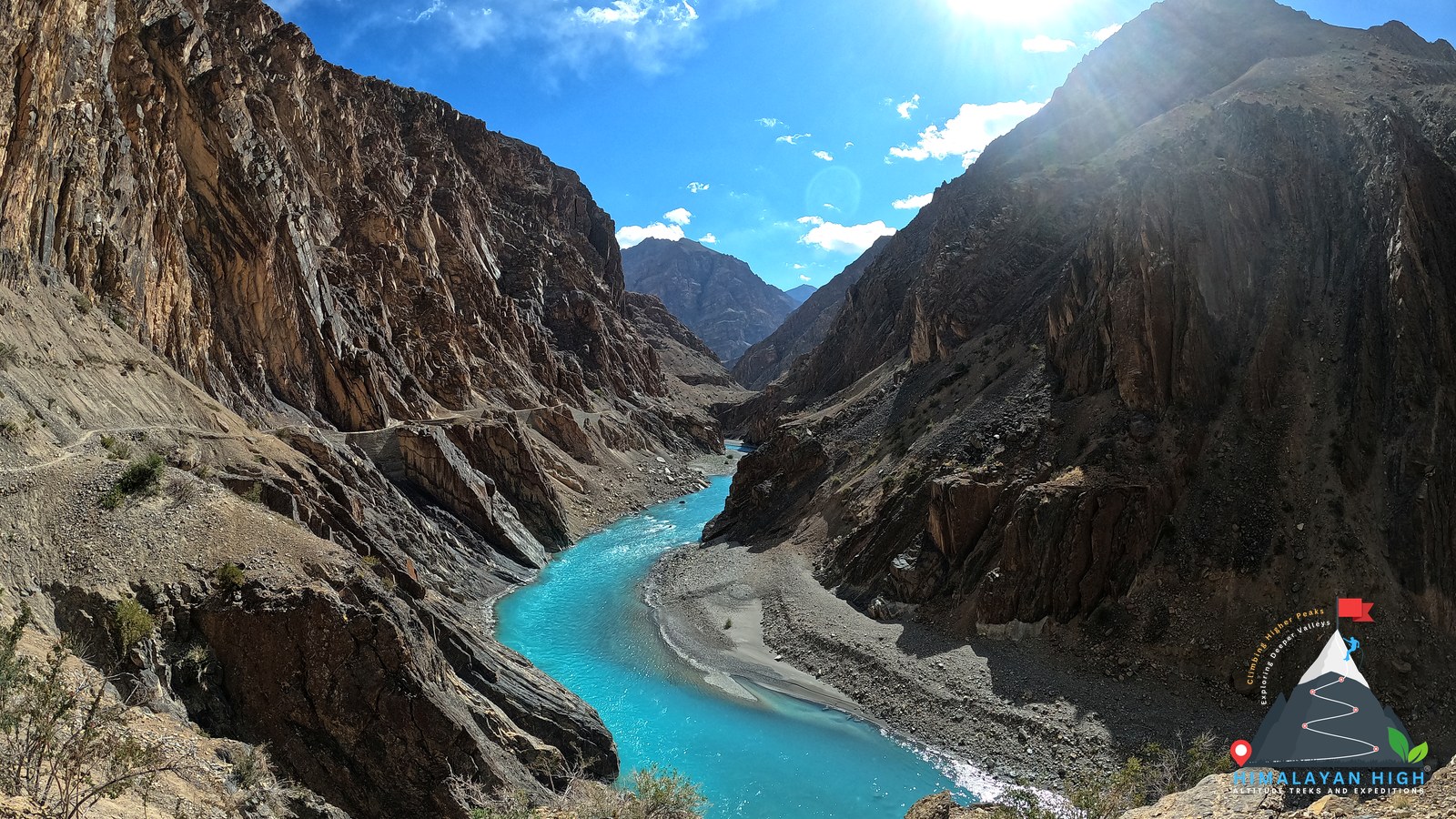
Ladakh, Zanskar and Spiti sit in the rain shadow of the Great Himalaya, so they are at their best from June to mid-October, just when the monsoon reaches most of the Himalayas. It is high desert country: big passes above 5,000 m, old monasteries, villages of mud and stone, turquoise lakes, and 6,000 m peaks that suit a first serious climb. Leh is one of our bases, and we have run treks and climbs here for many seasons.
If you plan in winter for a summer trip, as many of our guests do, now is the time.
Before anything: acclimatising in Leh
You fly into Leh, well above 3,000 m, so most of our Ladakh routes start slowly: you land, rest, and spend the next day on a gentle acclimatisation walk around Leh before any trekking begins. Parang La is the exception. It approaches from Manali through Spiti, with its acclimatisation days built into the Spiti approach.
On our peaks, there is more: some climbs add a second acclimatisation day or an acclimatisation loop over Stok La before heading to the mountain. Every summit has a dedicated technical training day and a flexible reserve day. You can read how we think about this in how we pace a high trek.
Treks for a first visit
Sham Valley (7 days from Leh and back, up to 3,900 m, Moderate). It walks village to village from Likir through Yangthang, Hemis Shukpachen and Ang to Temisgam, staying in homestays. It's a gentle, cultural introduction to Ladakh.
Shang La–Matho La (7 days, up to 4,950 m, Moderate). It starts with a homestay at Shang village, then crosses two passes to Mankormo and comes out via Stok village. It's a good first Ladakh trek, and a fine warm-up before a peak.
Markha Valley (8 days, up to 5,130 m, Moderate+). This is Ladakh's classic. It goes through Hemis National Park via Chilling, Markha, Hankar and the high pastures of Nimaling, then over Kongmaru La facing Kang Yatse. We camp as standard; where homestays exist on the route, at Markha and Hankar, you choose at the start of the trek.
Longer and wilder: the high desert traverses
Rumtse to Tso Moriri (14 days, up to 5,450 m, Strenuous). It crosses the Changthang plateau, the land of nomads and wild asses: Kyamar La, Mandalchan La, a rest day at Tso Kar, then a string of passes down to the shore of Tso Moriri. The walking route is a camping traverse under big skies; the standard 14-day plan includes a homestay night at Rumtse before the walking starts.
Zalung Karpo La (14 days, up to 5,200 m, Strenuous). It follows Markha to Hankar, then leaves the crowds behind over Zalung Karpo La and Chachar La into Zanskar, through Zangla and Stongde, with an excursion to Phuktal.
Kanji to Padum Grand Traverse (20 days, up to 5,250 m, Strenuous). It crosses Zanskar from Lamayuru and Kanji over Kanji La and Hanuma La to Lingshed, Zangla and Padum, with Phuktal on the way. It is a serious journey through some of the most remote inhabited valleys in India.
Stongde to Phuktal (14 days, up to 5,150 m). It drives over Singe La to Padum, then walks from Stongde over Stongde La to the cliff monastery of Phuktal.
Parang La (the 15-day Exploratory plan, Manali to Leh, Strenuous). It drives from Manali over Kunzum La to Kaza for an acclimatisation day, walks the high villages of Langza, Komic and Kibber with homestays, then crosses Parang La into Ladakh. The walking finishes near Tso Moriri, then the road takes you on to Leh. It's one of the great Himalayan crossings, and one of our own favourites.
The peaks
Ladakh's dry summer makes it a good place for a first 6,000 m peak. Among the peaks we run:
- Kang Yatse 2 (6,223 m), approached through Markha and Nimaling;
- Mentok Kangri (6,250 m), above Tso Moriri, with a Korzok acclimatisation day;
- UT Kangri (6,040 m), in the Rumtse area;
- Dzo Jongo West (6,280 m), semi-technical, often combined with Kang Yatse 2;
- harder climbs such as Kang Yatse 1 (6,405 m), Chakula (6,534 m) and Mt. Nun (7,135 m).
Our guide ratios are 1:2 on every Challenging and Challenging+ trek and every summit above 6,000 m, in every comfort setting; otherwise 1:6 Lean, 1:4 Standard, 1:3 Premium. We look at choosing between them in our article on your first 6,000 m peak in India.
Winter: the Chadar
In January and February, the frozen Zanskar river becomes a route: the Chadar trek. Nights can drop to −30°C. It is its own season and its own kind of trek, with three days in Leh before you set out.
When to go
- June: the season opens, with snow still on the higher passes.
- July and August: the heart of summer, dry while the monsoon hits elsewhere.
- September to mid-October: clear, crisp and quieter, with colder nights.
- January and February: the Chadar only.
Permits
We arrange all permits. Foreign nationals need protected-area permits for areas such as Rumtse and Tso Moriri; Indian nationals pay environment fees. Send passport details early, and we handle the rest.
Which suits you?
| If you want… | Choose |
|---|
| A gentle, cultural first visit | Sham Valley |
| A first high trek, or a warm-up before a peak | Shang La–Matho La |
| Ladakh's classic | Markha Valley |
| Nomad country and big lakes | Rumtse to Tso Moriri |
| Remote Zanskar | Zalung Karpo La, Stongde to Phuktal, or the Kanji–Padum traverse |
| A great crossing from Spiti | Parang La |
| Your first 6,000 m summit | Kang Yatse 2, Mentok Kangri or UT Kangri |
| Something completely different in winter | The Chadar |
Every trek runs as a private trip in Lean, Standard or Premium; your quote confirms the pickup and drop-off.
In short
- Season: June to mid-October; the Chadar in January and February.
- Most routes start with an acclimatisation day in Leh; Parang La acclimatises in Spiti.
- Treks range from village homestays to three-week traverses.
- Ladakh's dry summer makes it a good place for a first 6,000 m peak.
- We arrange the permits; foreigners need protected-area permits in some areas.
Planning next summer? Tell us your dates and experience, and we'll suggest the right route or peak.