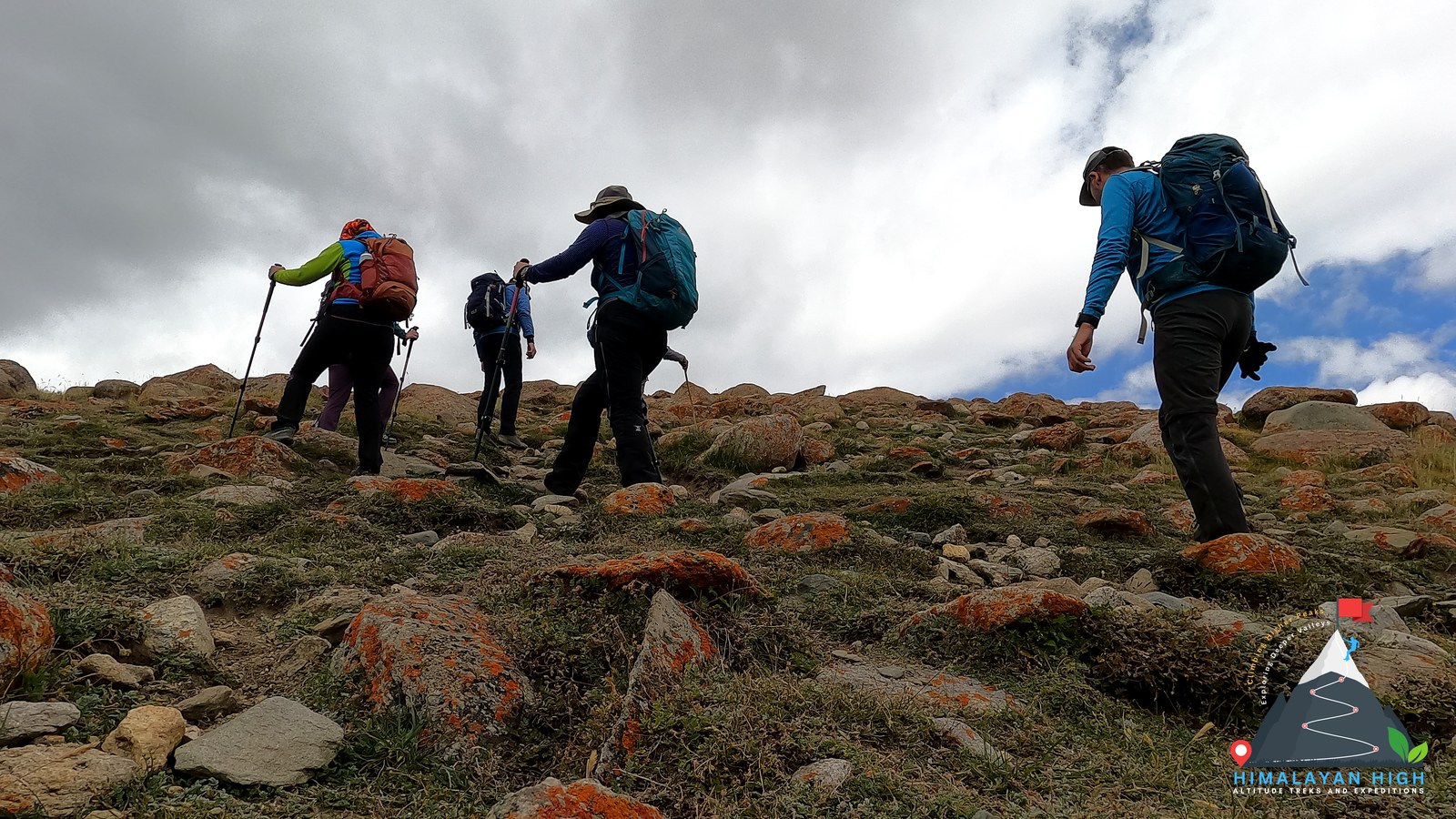
We let the itinerary do the acclimatising, through how we pace each day, rather than rushing to a schedule or reaching for pills as a shortcut. That means sensible gains in sleeping height, rest days where the altitude asks for them, a flexible reserve day on the longer and harder trips, and an oxygen check every morning. We'd rather you arrive prepared than medicated: training, stamina, endurance and a calm head do more for you up high than any shortcut. Our days aren't padded for the sake of it either. We run faster-paced versions only for ultra-runners and very fit trekkers who arrive already acclimatised. And when the mountain or the body says no, we turn back. That is part of the plan, not a failure of it.
This is the part of trekking people least like to think about and most need to get right. Here is how we do it.
The mountain doesn't care about your schedule
People respond to altitude differently, and fitness at sea level tells you surprisingly little about how you'll cope up high. So we build time for acclimatisation into the itinerary, listen to how each person is doing, and can pause, change route or descend.
None of that works if the itinerary is in a hurry. A plan that gains too much height too quickly leaves no room for a slower body, however strong it is at home. So we start with the itinerary, not with the person's willpower.
How we build it into the plan
Sensible gains. We plan sleeping heights so the climb is gradual, and where we can, we walk higher in the day than we sleep at night. On our Ladakh treks and peaks, the first days are spent getting used to Leh's height before the walking begins.
Rest days where they matter. Not everywhere, just where the altitude jump or the terrain calls for one. On a summit trek, there are also dedicated days to train on the snow and gear before the summit.
Reserve time. We plan a flexible reserve day where the route calls for it, always on summits above 6,000 m and the major glacier crossings, and the itinerary shows where it sits. It is there for weather or a slower day.
Unhurried days. Trekking in the mountains shouldn't be judged by time and distance. We walk at a pace you can talk at, and the day ends early enough to rest.
A private team. This is where private trekking makes the biggest difference. Nobody is waiting for a group to catch up, and nobody is being pushed to keep up. If you need a slower morning or an extra night, the plan bends for you alone.
For training and preparation before you come, see how to prepare for a high-altitude trek.
What we check every day
Oxygen saturation is measured every day on trek, in every tier. Our leaders and guides have sound knowledge of high-altitude physiology, emergency medicine and protocols, and they watch for more than a number: how you slept, how you're eating, how you walked yesterday, and how you seem this morning.
Before the trek, we collect your health, wellbeing and emergency information, so the team knows you before day one. A doctor-signed medical certificate is required before arrival for Challenging and Challenging+ treks and for everything above 5,000 m (see pre-booking information). Every trip carries a high-altitude medical kit. The full picture is in our Max Safety Assurance Protocol.
We don't give medical advice here, and this isn't a substitute for your own doctor. It is how we plan and run a trip.
Why we turn back
A summit or a pass is a goal, not a promise. The weather turns, the snow changes, or someone simply isn't coping as well as they should be. When that happens, the leader and the team make the call, and the call is often to wait, change course or go down.
We would rather bring everyone home with a story about the one that got away than push on into something we can't control. Our record of zero fatalities and zero injuries since inception is one we're proud of, and it was kept by discipline, not luck. The mountains promise nothing, so neither do we.
A turn-back from our own logbook
On Kang Yatse 1 in July 2015, the snow was crystalline and sugary, and it wouldn't hold our anchors. With protection we couldn't trust, we ended the summit attempt. Our report records it as a failed attempt.
That's the kind of decision we mean. It is made on the mountain, by people who know it, and nobody needs to argue for it afterwards.
What this means for you
- Expect the itinerary to look a little slower than some you'll see. That is deliberate.
- Expect to be checked every day, and to be asked honestly how you feel.
- Expect the plan to bend: an extra night, a slower morning, a later summit day.
- And accept that the answer may be no. Mountaineering is about the journey as much as the top, and about learning from the days that don't go to plan.
In short
- The itinerary does the acclimatising: gradual gains, rest days, reserve days.
- Oxygen saturation is checked every day, in every tier.
- A private team means the pace is yours, not a group's.
- Turning back is part of how we work, and a summit is never promised.
- Not medical advice: talk to your own doctor before a high trek.
Tell us the trek you have in mind, and we'll show you how we'd pace it for you.