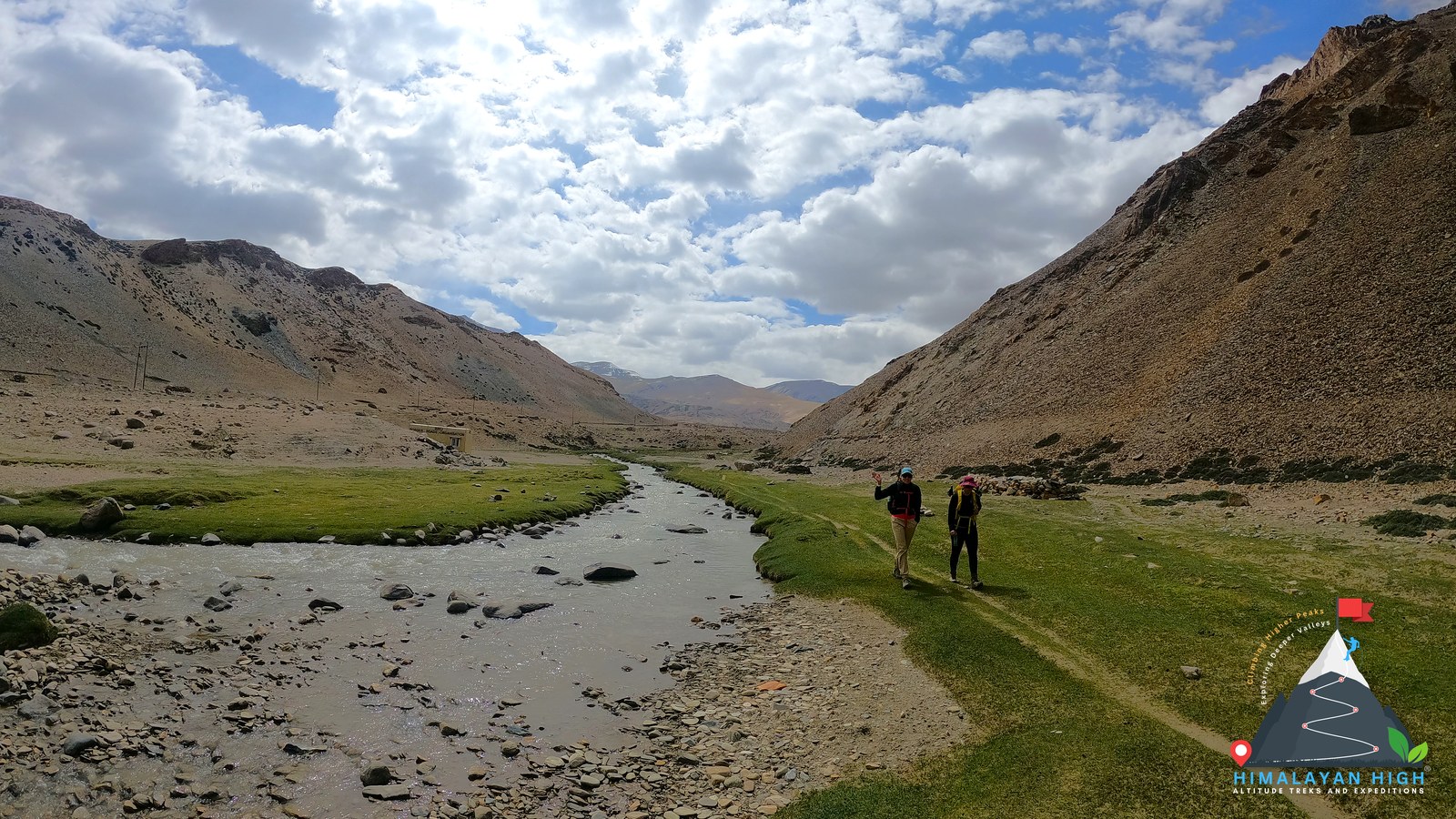
A private trek with Himalayan High means the whole trip is yours: your own team, your dates, your pace, and a route built around what you want from the mountains. One person is a group, and we never add outside guests to fill your trip. Safety is the same in every tier, and acclimatisation is built into the itinerary, never rushed.
We have operated in the Himalayas since 2014, and today every trip we run is private, mainly in the Indian Himalayas and mostly between 3,500 and 7,500 m. Here is what that looks like on the ground, and how to tell whether it suits you.
Your dates, your pace, your route
We don't run fixed departures. Your trip starts when your leave allows, not when a batch fills up. Most trips run from the nearest airport and back, and we arrange the permits, from forest entry to Inner Line passes.
Most of our groups are two to six people, and many are just one. A group can be up to ten, and up to twelve on request, but it is always your group: your family, your friends, your climbing partner, or you alone.
Because the team is yours, the plan can be too. A parent may need an extra rest day. A climber may want a spare day at high camp. A couple may want a quieter valley on the way out. We build the itinerary from what we know on the ground, and we choose lesser-done routes where the mountains are still quiet.
In a group of twenty-five, the day is set for the group: one start time, one pace, one plan. With a team of your own, the day is set for you.
Who walks with you
A trip leader, on every trip. The leader runs the programme from start to finish and takes decisions with the team as the situation demands: when to start, where to camp, whether to push on or wait.
A local route guide, on every trek. This is a principle for us, not a number on a staffing sheet. Someone from the region knows the trail, the weather signs and the people along the way, and hiring locally is the right thing to do. It is about safety and ethics, not ratios.
A crew built for the route. Depending on the trek, that means a cook, kitchen and camp helpers, and porters or mules. They are local, they are experts at what they do, and they are paid fairly.
Someone at our end. Before you arrive and while you are out, someone plans your trip, follows it and stays in touch with the team. Our founder, Suman Chowdhury, was born and grew up in the Himalayas. Our co-founder, Montu Singh, runs operations; he is search-and-rescue qualified and has climbed two peaks above 7,000 m. You can read more about who we are.
We run every trek ourselves
We run every trek ourselves. We never sell our trekkers to another agency or outsource a group. We always hire local guides, cooks and horsemen, but a Himalayan High operations manager plans and monitors every trip, and our trek leader travels with you and makes every safety call.
Safety that doesn't change with the price
Comfort changes between our tiers; safety doesn't. On every trip, in every tier, you get:
- a high-altitude medical kit;
- oxygen saturation measured every day on trek;
- guides and leaders with sound knowledge of high-altitude physiology, emergency medicine and protocols;
- your health, wellbeing and emergency information collected before the trek, so the team knows you before day one.
Safety gear follows what the trek demands, never the price you pay. Our guide ratios are 1:2 on every Challenging and Challenging+ trek and every summit above 6,000 m, in every comfort setting; otherwise 1:6 Lean, 1:4 Standard, 1:3 Premium.
A doctor-signed medical certificate is required before arrival for Challenging and Challenging+ treks and for everything above 5,000 m. The full picture is in our Max Safety Assurance Protocol.
Since we began, we have had zero fatalities and zero injuries. It is a record kept by discipline, not luck, and the mountains promise nothing.
How we pace a climb, and when we turn back
We build acclimatisation into the itinerary itself, through how we pace each day, rather than rushing to a schedule or reaching for pills as a shortcut. In practice, that means sensible gains in sleeping height and rest days where the altitude asks for them.
A private team makes this easier. Nobody is waiting on a group, so the plan bends around how you are actually doing. If a change adds a night, we tell you first.
And we turn back when it's right. A summit or a pass is a goal, not a promise. Weather, snow and the way someone is coping all count, and changing course is part of how we work, not a failure of the trip. If you want to prepare well, start with our guide on how to prepare for a high-altitude trek.
Comfort: Lean, Standard or Premium
You choose how comfortable the trip is. Lean, Standard and Premium differ in rooms, tents, meals and vehicles. Premium can include luxury stays and higher-end expedition support where the route permits, without losing what makes the mountains worth the journey.
What doesn't change is everything in the safety section above. Your quotation sets out the exact arrangements for your route, and how we conduct our treks explains what is typical on the ground.
Leaving the mountains as we found them
We follow Leave No Trace, and we carry our waste down. We source locally where we can, keep avoidable plastic to a minimum and avoid permanent fixed camps in our own arrangements. Small private groups are part of this too: fewer people leave less behind. We wrote more about it in Be responsible: trek in smaller groups.
Is it right for you?
A private trek suits solo travellers, couples, families and friends who want their own team, and serious trekkers and climbers chasing a pass or a peak. It suits people who value time, space and good judgement over a fixed programme.
It costs more than a seat in a large group, because the whole team is yours. If you want a fast schedule or a big social group, this isn't that kind of trip. If you want the Himalayas at your own pace, with people who know them well, it probably is. Our HH Exclusive treks are a good place to start.
In short
- Every trip is private. One person is a group, and no outsiders join.
- A trip leader on every trip and a local route guide on every trek.
- Safety is the same in every tier; comfort is what you choose.
- Acclimatisation is built into the itinerary, and we turn back when it's right.
- We carry our waste down and pay our local crews fairly.
Tell us your dates and what you want from the mountains, and we'll plan it around you.