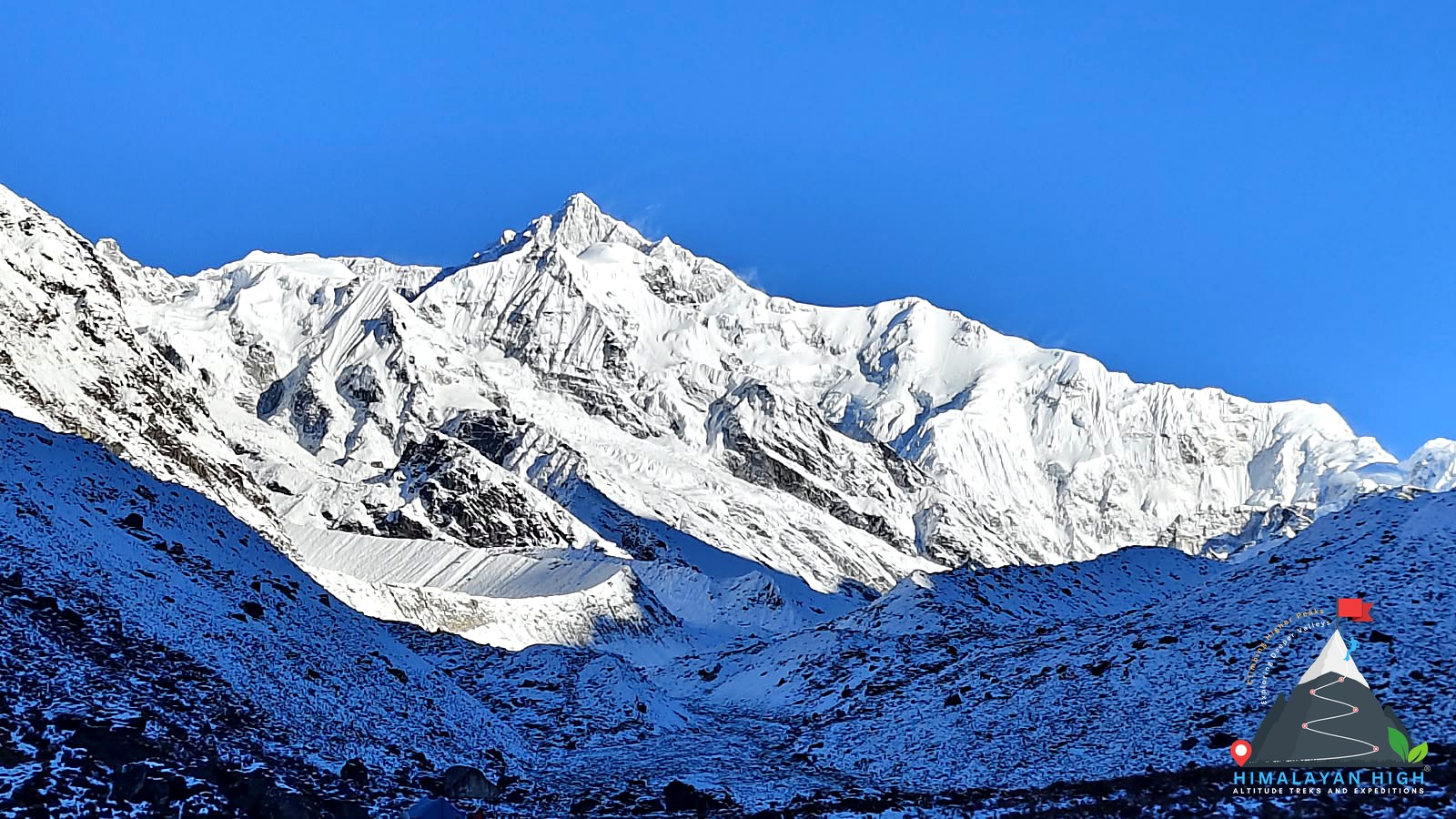
An email arrives from an ultra-runner. He trains on weekends in the hills, lives at altitude, and has a week. "Can I do Goecha La in four or five days?"
We didn't say yes, and we didn't say no. We planned six, on one condition. Here's that story, another like it, and how we plan faster treks without ever rushing the altitude.
The 30-second version
- Faster is possible, for ultra-runners and very fit trekkers who arrive already acclimatised.
- We plan, persuade and adjust. We don't just say yes, and we don't just say no.
- Back-to-back peaks. Pre-acclimatised climbers can often take two or three 6,000 m summits in one fast-paced trip.
- The route has a say too: water at the in-between camps, campsite spacing and the strength of the local team.
- Altitude still sets the pace. We build acclimatisation into the walking days, never pills.
- The crew is paid in full. When a trek runs shorter, our local crew is still paid for the standard days.
- We've kept names private; the stories are real.
Six days to Goecha La
 Trekkers silhouetted against the pre-dawn sky on the Goecha La trek, Sikkim.
The ultra-runner was the real thing: a regular weekend trekker, an expert distance runner, and someone who lives at about 2,000 m. He wanted Goecha La in four or five days, far quicker than our standard itinerary.
Speed on a trail is one thing. Speed at 4,600 m is another, because the body adjusts to height at its own pace, however fit it is. So we planned six days, on the condition that he arrived already acclimatised, and we built the whole team around him: a leader and guides who could move at his pace, and a plan with room to slow down if his body asked.
He arrived ready, and it went beautifully. Everyone on that trek, the runner and the crew, came home with a very good story.
Two nights at Yuksom first
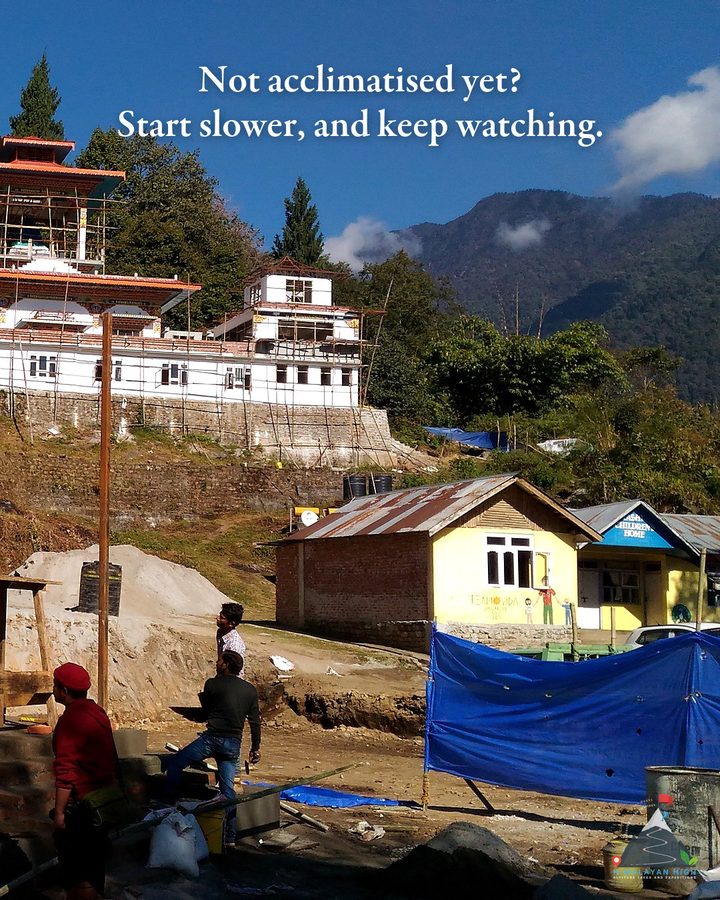 A monastery and prayer flags above a building site in Yuksom, West Sikkim.
Another ultra-runner wanted Dzongri in three days. She was more than strong enough, but she hadn't come acclimatised.
We didn't refuse. We persuaded her to start with two nights at Yuksom, at the start of the trail, and to walk on a plan with room to slow down. Those nights didn't make her acclimatised; they gave her body a start, and her leader watched how she was adapting every day. She agreed, and walked the trek very well. That's the difference between a fast trek and a rushed one: the plan behind it.
Three peaks, back to back
Pre-acclimatised climbers often come to us straight from Nepal, or from another high trip, and want to make the most of what their bodies have already earned. So we often run fast-paced back-to-back climbs on Ladakh's 6,000 m peaks: two or three summits in one trip.
The first climb runs at a normal, careful pace. After that, acclimatisation is what usually takes the time. We reassess how the team is adapting before deciding whether to shorten the next approach. Where it's safe, the second and third summits can come in far fewer days, with the same checks every morning and the same right to slow down.
Being pre-acclimatised opens a lot: attempting harder treks, reaching a summit in fewer days, or doing a long trek in a shorter window. But it isn't always possible, because the route has a say too:
- Water. Can the in-between campsites give water at that time of year? A dry campsite can't be a night stop.
- Campsite spacing. How far apart are the usable camps? Sometimes the next safe camp is simply too far for one day.
- The local team. Does the region have guides and crew strong enough to move a camp at that pace, day after day?
We look at all of it before we say yes.
Who a faster trek is for
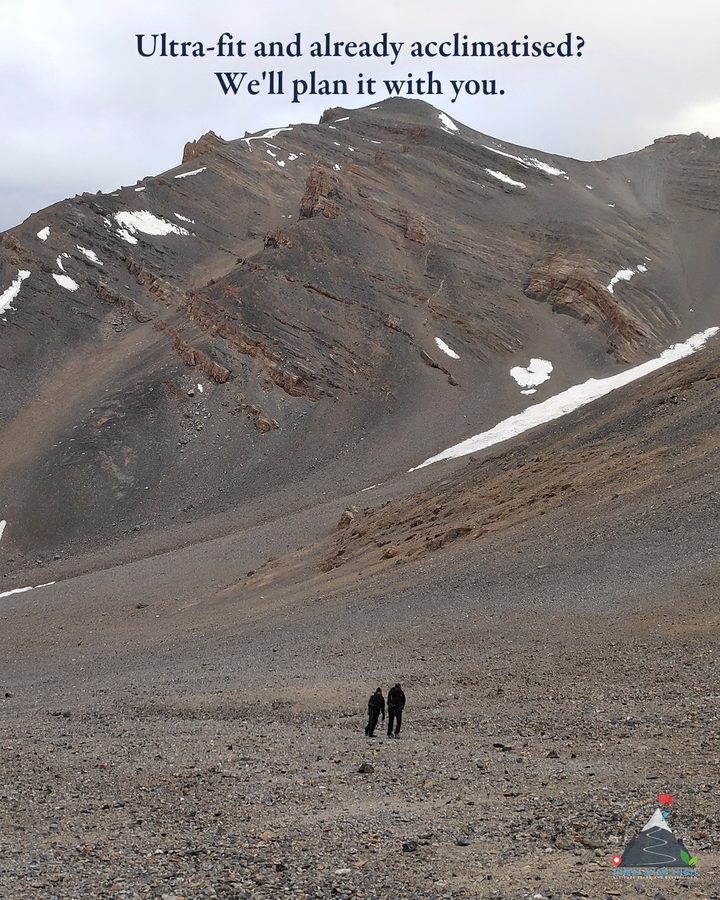 Two trekkers crossing the scree on the approach to the Parang La, Spiti.
We run faster-paced versions only for ultra-runners and very fit trekkers who arrive already acclimatised. That usually means someone who:
- lives or trains at altitude, or has been high in the weeks before;
- has years of long days on their feet, not just a good gym score;
- listens to their body, and to the leader, when the plan needs to slow down.
Living or training at altitude is one input to our assessment, not a pass on its own. We look at the whole picture before we plan anything faster.
If that isn't you yet, a standard itinerary isn't a lesser trek. It's the safer one, and it gives you more time in the mountains you came for.
How we plan it
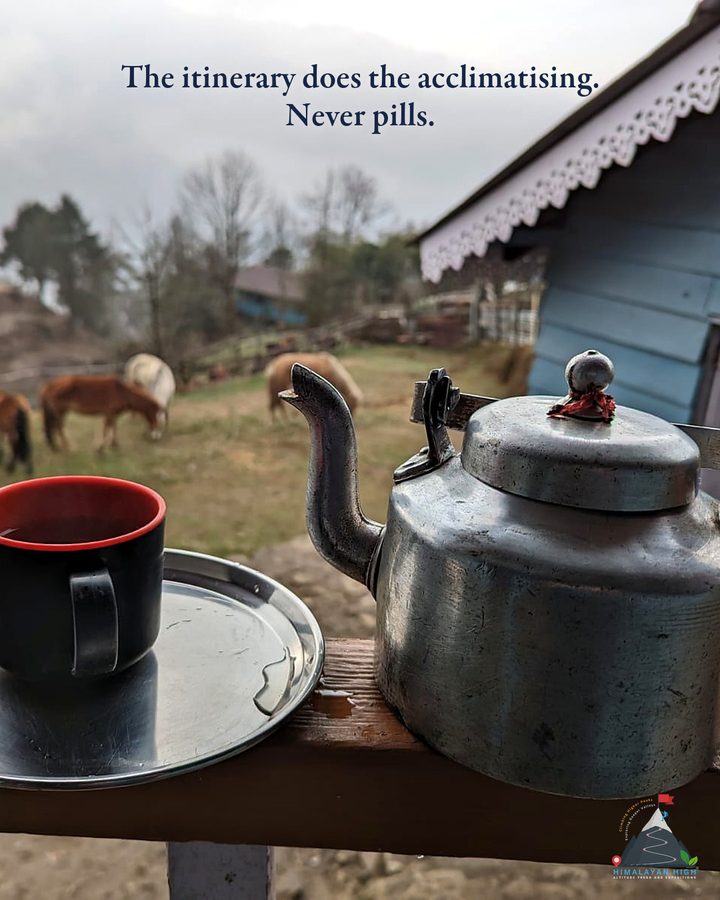 A kettle and a cup of tea on a lodge railing, ponies grazing behind, on the Goecha La trek.
- We start with the altitude, not the calendar. Sleeping heights still climb gradually. We may combine stages or adjust rest days only after reviewing recent altitude exposure, sleeping heights, terrain and the team's ability to slow down.
- We ask before we plan. Where you live, what you've run or climbed lately, and how high you've slept in the past weeks.
- We build in a way to slow down. If the body says wait, the plan bends. A shorter trek is a target, never a promise.
- The same checks every day. Oxygen saturation is measured every morning on trek, and a leader who knows high-altitude physiology watches more than the number.
- Practice, not pills. We'd rather you arrive prepared than medicated. Training, stamina, endurance and a calm head do more up high than any shortcut.
More on how we think about this in how we pace a high trek. This isn't medical advice: talk to your own doctor before any high trek.
Why the crew is paid in full
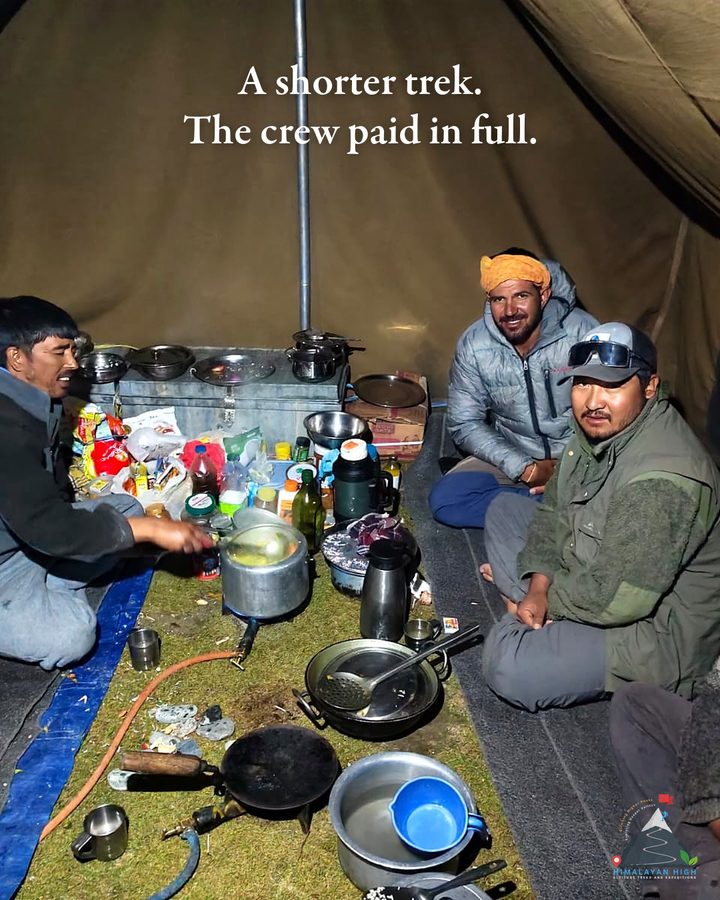 The local crew sitting together in the kitchen tent on the Kang Yatse 2 trip, Ladakh.
When a trek is done in fewer days, the effort for our crew is the same, often greater: longer stages, earlier starts, the same loads. So we pay our local crew for the standard number of days, as if the trek had run its full length. On that Goecha La trek, it meant paying for the standard number of days, not six.
That isn't a business calculation. These are the people we've climbed beside for years. It comes from brotherhood, and from respect for the people who make every trek possible.
What it costs
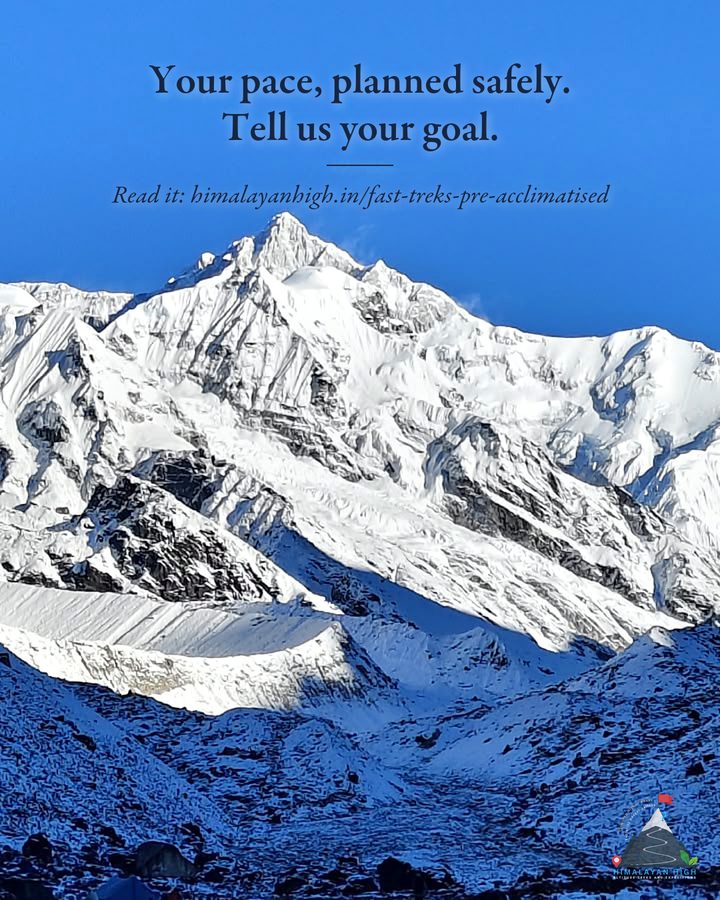 Kanchenjunga from View Point 1 on the Goecha La trek.
Don't expect a faster trek to cost much less. The crew is paid for the full trek, and a team that can move at your pace is a strong one. What a faster trek really saves is days of leave. Your quote shows exactly how it's priced. Why private treks cost what they do is in why a private trek looks expensive.
Fast and fit? Tell us your goal, where you live and train, and how high you've been lately, and we'll plan it with you.