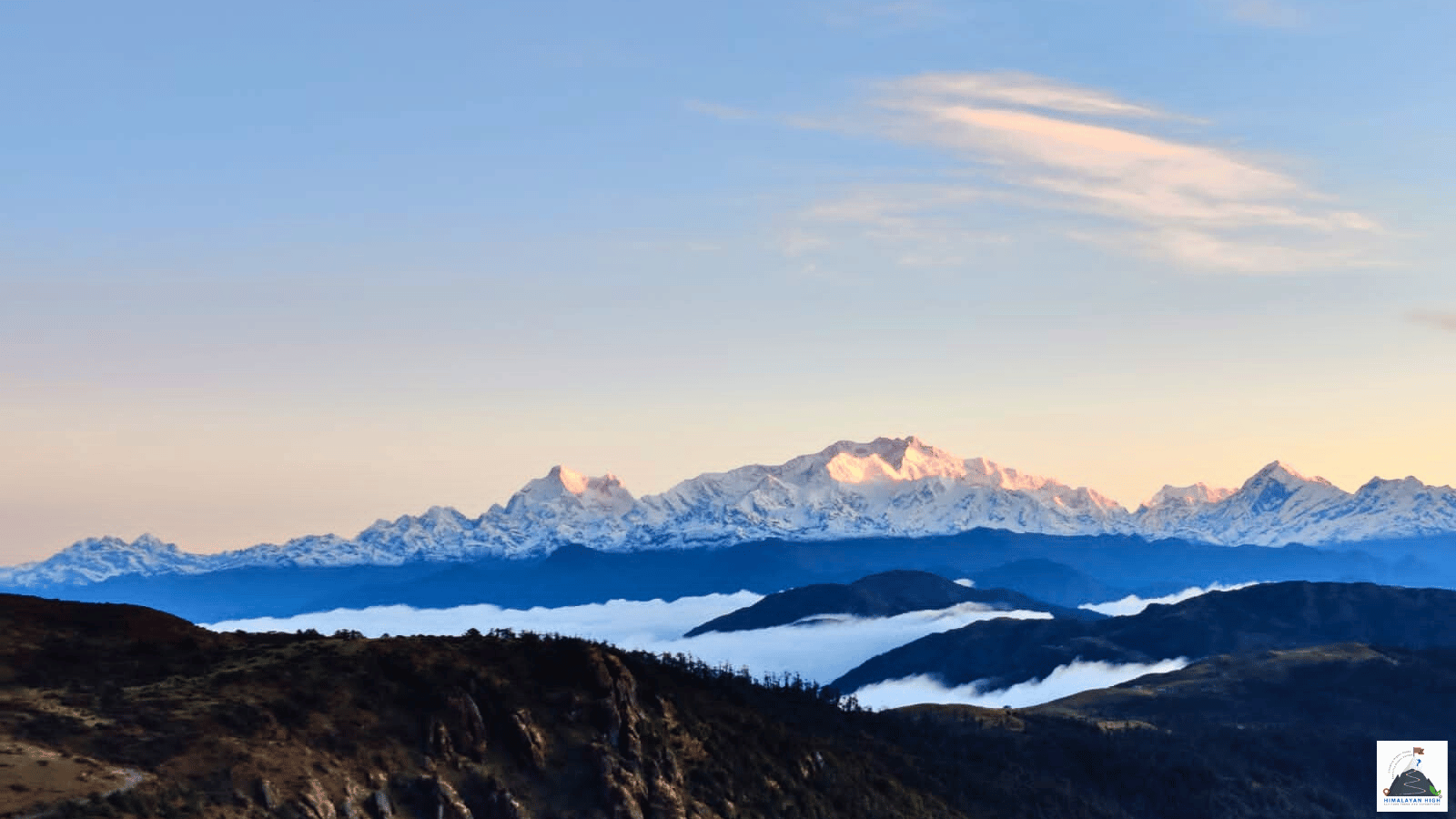
Bhareng is a village at about 2,400 to 2,500 m in Soreng district, West Sikkim. Siliguri is usually 5.5 to 7 hours away via Jorethang; foreign nationals need a Sikkim Restricted Area Permit approved online in advance.
Region: Darjeeling Sikkim
Route hubs: Siliguri - Sevoke - Teesta Bazaar - Melli - Jorethang - Daramdin - Sombaria - Okhrey - Ribdi - Bhareng
Nearest airport
Bagdogra Airport, Siliguri (IXB)
145 km • About 6 hr
Nearest railhead
New Jalpaiguri Junction, Siliguri (NJP)
140 km • About 5.8 hr
From the airport
Bagdogra Airport (IXB), about 12 to 15 km south-west of Siliguri, is the airport for Bhareng. From the terminal it is about 145 km and 5.5 to 7 hours by road, so on the day you fly in, aim to be driving away by about 10 am to arrive in daylight; with a later flight, spend the night in Siliguri and set off early. A car booked through to Bhareng, meeting you at arrivals, is the simplest way. Otherwise take a prepaid taxi or an auto-rickshaw into Siliguri and pick up a shared jeep for Jorethang there. Pakyong, Sikkim's own airport, had no scheduled flights in 2025-26 and lies in the east of the state, so plan on Bagdogra.
From the railway station
New Jalpaiguri Junction (NJP), on the south side of Siliguri, is the railhead, with direct trains from Delhi, Kolkata and Guwahati among others. It is about 140 km and 5.5 to 7 hours by road to Bhareng, so an overnight train that arrives early in the morning lets you drive through the same day. Either have a car meet you at the station, or take a taxi or auto-rickshaw the short way into Siliguri, to the taxi stand beside the SNT bus stand; shared jeeps for Jorethang leave from there and from the Tenzing Norgay bus terminus through the day. Sikkim has no railway yet: the Sevoke–Rangpo line, which will have a station at Melli, is still being built, with completion targeted for December 2027.
By road
Bhareng is a small village in Soreng district, West Sikkim, near the West Bengal border and the Barsey Rhododendron Sanctuary. The road follows the Teesta and Rangeet valleys up to Jorethang, then climbs west. From Siliguri it is about 130 to 135 km, usually 5.5 to 7 hours with a meal stop.
- Siliguri to Melli: about 58 km on NH10 via Sevoke and Teesta Bazaar, beside the Teesta. At Melli you cross into Sikkim.
- Melli to Jorethang: about 25 km up the Rangeet. Siliguri to Jorethang, about 83 km, takes 2.5 to 3 hours.
- Jorethang to Ribdi via Daramdin, Sombaria and Okhrey: about 45 to 50 km of narrow, winding road climbing some 2,000 m.
- Ribdi to Bhareng: a few kilometres more. Jorethang to Bhareng takes 2 to 3 hours by car.
NH10 between Sevoke and Melli is prone to landslides from June to September. When it is shut, cars can reach Jorethang over the hills via Darjeeling and Singla, the detour set for light vehicles after the October 2023 flood, though it is slower. Indian citizens need no permit to visit Bhareng. Foreign nationals need a Sikkim Restricted Area Permit; since January 2026 it is issued only online, through the e-FRRO portal, and must be approved before you reach the Sikkim border, as it is no longer issued at Melli.
Local transfers
From Jorethang, shared jeeps run up to Okhrey and Ribdi, taking about 3 hours to Ribdi; aim to reach Jorethang by about midday to be sure of a seat onward. From Ribdi, hire a local vehicle for the last stretch to Bhareng, or ask your Bhareng homestay to send one, and try to arrive by mid-afternoon rather than drive in the dark. The trail to Gorkhey leaves from upper Bhareng: about 4 to 5 km through forest, around 2 hours going down and up to 3 hours coming back. For the way out, book a vehicle from Bhareng to Jorethang the day before, as shared jeeps from Jorethang to Siliguri run only until about 3 pm. Mobile signal is weak at Bhareng and Gorkhey.
Safety
Keep a spare day, especially from June to September, when landslides can block NH10 near Sevoke for hours or days and cut the smaller roads beyond Jorethang; do not tie the drive to a same-day flight or train. At about 2,400 to 2,500 m, Bhareng is not high enough to trouble most people, but winter nights are cold. Check the road with your driver or homestay the evening before. Foreign nationals planning to walk on to Gorkhey and the Singalila ridge in West Bengal should check first: this crossing on foot is reported to be closed to them.
Travel tips
- Plan buffer time for road delays, especially in monsoon and winter.
- Start early for long drives to avoid night stretches on mountain roads.
- Keep offline maps and cash as backup in low-network zones.
- If you are continuing to high altitude areas, acclimatize and hydrate well.
Friday, September 25, 2020 9:36:28 AM
Every day I keep learning new things, but as of now, I think I can describe myself as a Loyal Himalayan Lover, Avid Trekker, Student Of Mountaineering, Amateur Photographer and an Enthusiastic Anthropologist. I am a Computer Science Engineer by education and previously worked as a Software Developer for premium IT companies. However, I quit the luxury of a high-earning corporate job and left behind the herd to walk towards the spiritual path laid down by the Godly Himalayas. At the age of 27 with no savings at all and being the only son from a lower-middle-class family, it was too young to fight against the family who in turn had to fight against the rules laid down by society. However, with my determination and perseverance, everything became smooth by passing time.
It wasn't easy for me as I learnt the hard way from mistakes - my own and by observing others. I fought 2 major road accidents that broke my right tibia and femur. I underwent 7 surgeries that kept me away from the mountains, but I patiently fought them all to get back to trekking again in the Himalayas with rods and plates in my bones. Despite doctors saying I cannot walk properly ever again to getting back to trekking on the difficult routes again, Life made me understand very clearly what it wants out of me in this World. It wants me to serve the Himalayas and its community, live a peaceful, content and simple life. That's what I have dedicated my this life to. I am not religious, but spiritual. The Himalayas define my road.
The Himalayas today is spammed by mushrooming trek agencies and big companies who take pride in being India's Largest, biggest, oldest, etc. They are exploiting everything for the sake of profit. It is in dire need of regulation by credible Government authorities, Sustainable Tourism Practices needs to be forced upon every organisation, Small Group Sizes needs to be mandated, Fixed camping should be restricted in alpine zones and Negative Ecological Impact Trekking Protocols should be laid down immediately by governing bodies. With all these objectives, I founded Himalayan High in the year 2015. Learn more about Himalayan High on About Himalayan High
© 2026 Himalayan High Altitude Treks And Expeditions Pvt. Ltd. All rights reserved.
Original content, itineraries, and media are proprietary and protected by applicable copyright laws.